Tuesday, February 18, 2020

PST Mod Stage 0.5 for Dummies - How to make a Solar Telescope without breaking the bank or burning your eyeballs

So, like me you got the PST but it's not enough and you know .001 zilch about optics?

The following is a condensate of SolarChatForum that is dumbed down enough to make a PST mod easy.
I had my sights on a mod 2, meaning replacing the back with a good focuser and the front with more powerful optic but I don't understand enough about optic so I want to start safe and cheap. This more humble blog is about a mod 0.5: replacing the back with a good focuser that doesn't wobble around, something with enough back focus (focus plane range) that you can use any binoviewers.

First you disassemble your PST.

to do that you unscrew the golden tube

and with this thing
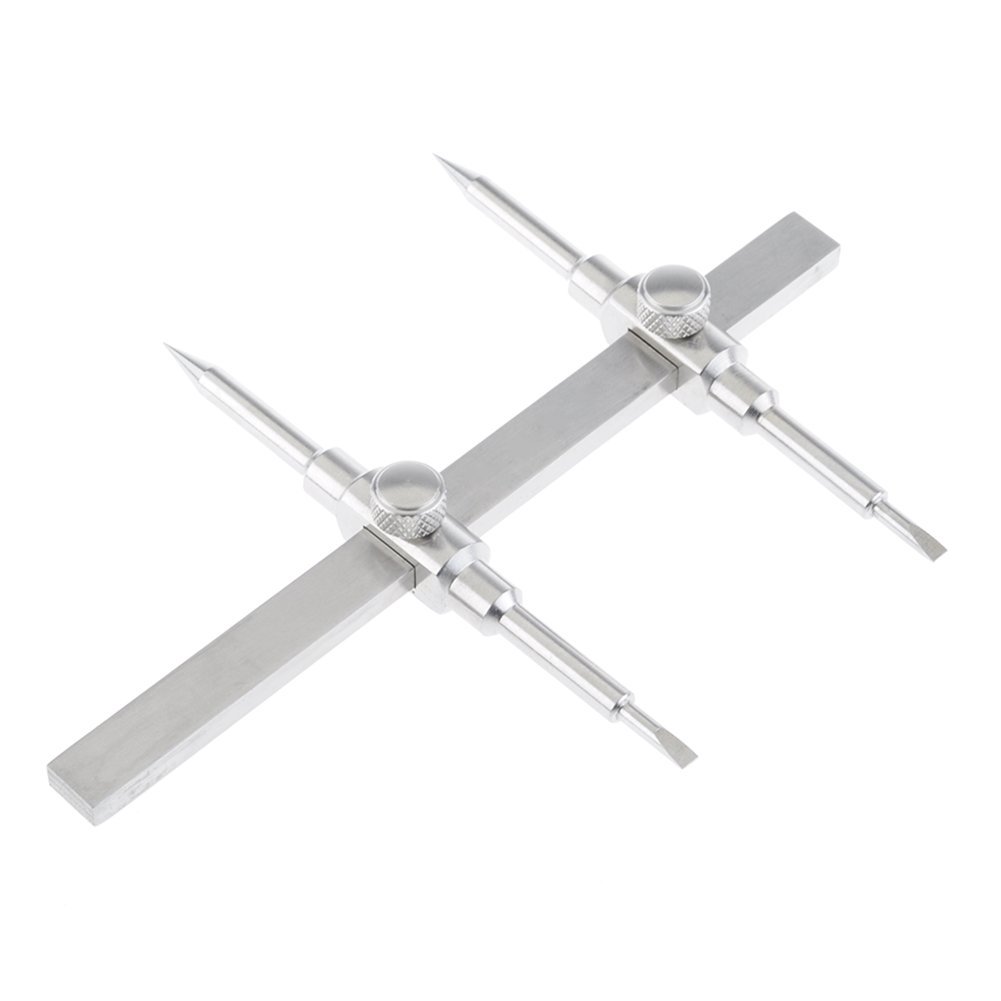
you unscrew the corrector lens in front of the etalon

tada now the etalon is ready to be unscrewed


push hard


This is your etalon. Étalon is a French word which means standard of measurement, and also stallion.

If you're in a mood to disassemble everything you can unscrew the eyepiece holder, it won't be used but why not. (EDIT: this part is essential)

the tiny one at the bottom of the eyepiece holder is purple, maybe a UV filter?
Then we get the one that's attached to the black box, it's glued in so it'll take a bit more work.


ITF stands for Induced Transmission Filter and it's a bandpass for H-alpha 656nm. Acording to this site, this tiny element costs $75!
I don't know why there is another H-a bandpass after the etalon.

These shiny lenses protect your eyeballs from blindness, give them a hug.
Now onto the last bit which is glued.

Notice the blue golden color of the prism, I think it's treated to filter the beam. Since we're not using it, are we risking our eyesight?
Heat it up the glue with a heatgun

wrap the bit with paper

clamp and twist


put the ITF+UV assembly back together,it will go to the end of the back.


then fit this SCT nosepiece to the back of the etalon
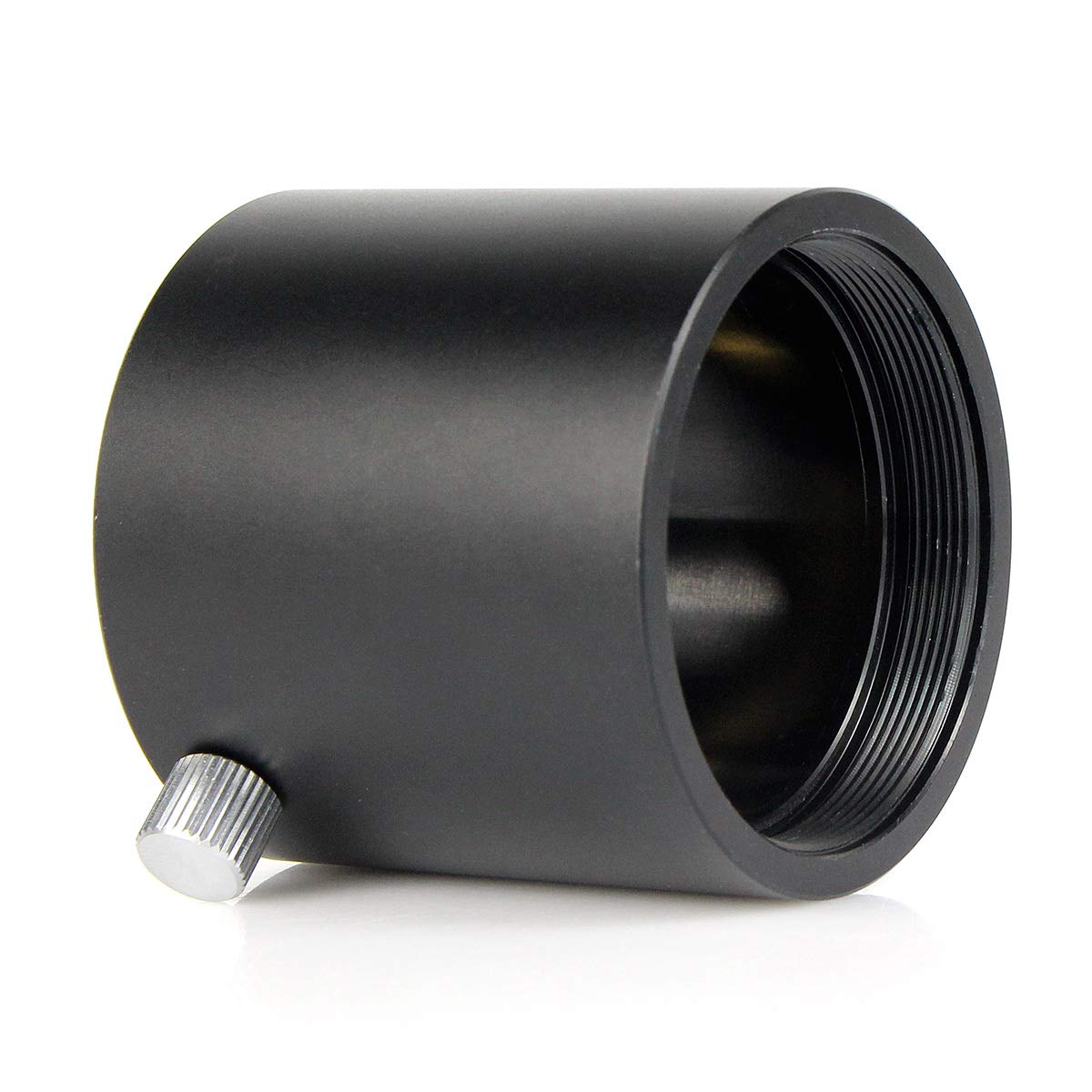
the M48x.75 female fits perfectly

Then add a few other bits to recreate the 200mm back, here I'm experimenting with 1.25mm 2x barlow then a 1.25mm helical focuser.


Now why do we have to put 200mm of back behind the etalon?
The PST is a telescope with a focal length of 400mm. Focal length means distance behind the lense where the beams converges into a focused image. It's commonly represented as lines intersecting (blue in the diagram). The etalon is 200mm behind the front, it counts as 0mm towards the beam travel to the focal plane so there is 200mm more to go.
Why does it count as 0mm? The Fabry-Perot etalon needs beams that are parallel to do its precise boucy light thing but the front lense converges the rays into a cone. To correct that, the etalon is flanked by two plano lenses (yellow in the diagram). The plano concave at the front turns convergent beams into parallel beams to feed the etalon and the plano convex lens behind the etalon turns the now-filtered parallel beams back into convergent beam.


what's missing now is the adapter to fit the end of the helical focuser M42 male to the ITF assembly's M32 male.

The simplest solution was found by Marty in SolarChatForum, it is to unscrew the eyepiece holder of a diagonal and replace it with the stock ITF assembly.
And here is the result.


If there is sun tomorrow I shall test it.

The sun was up, I placed a binoviewer in the focuser and put my eyes in it.
I could feel something tingly inside the eyeball so I stopped and re assembled the PST stock, looked again, no tingly.
The brightness was the same so my guess is that the pentaprism inside the black box of the stock PST reduces infrared by a lot.

Needless to say I took the discussions about filtering IR and UV VERY VERY seriously.
After much reading people who have been doing this or know the science, I came to a temporary conclusion that the ideal mix of filter is a.
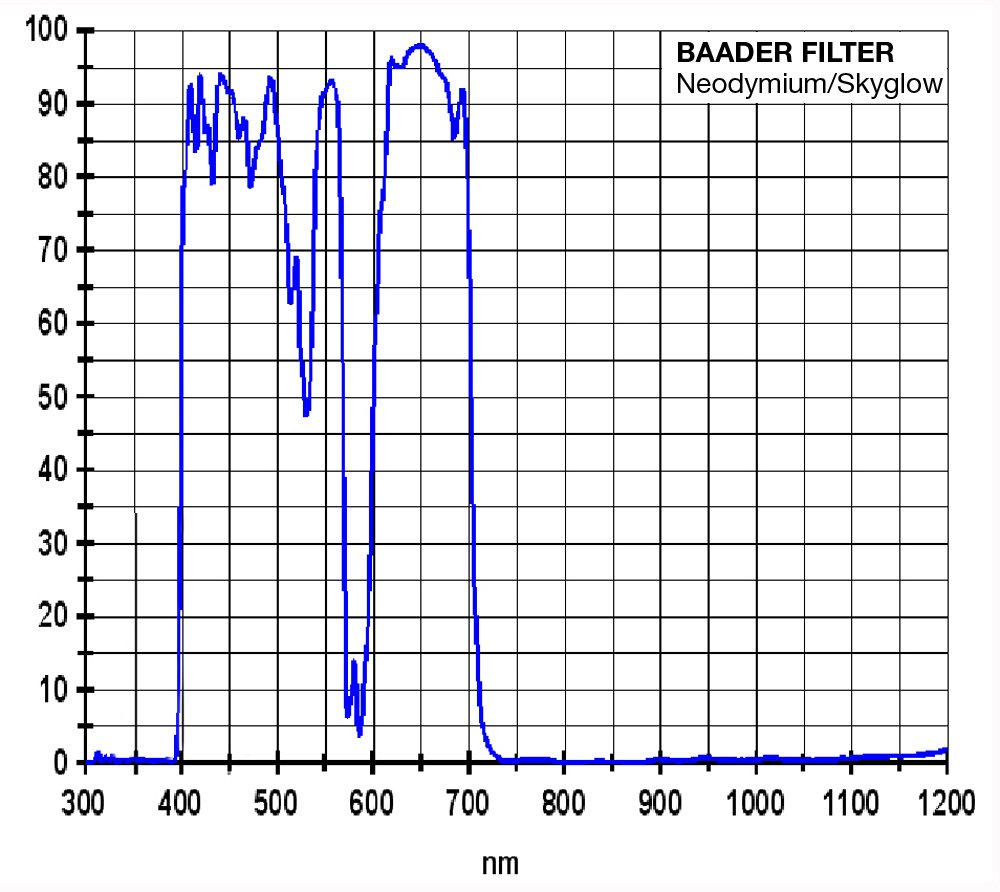
Baader moon and skyglow or a 35nm CCD h-alpha filter to reject IR and UV around the visual spectrum
BelOptik KG3 to reflect IR beyond 1200nm, it is good in the far IR like a KG3 and
Here are the graphs, you can see they are complementary in the far IR and it is coated to reflect IR thus preventing filter from cracking under heat expansion. Here is a demonstration
Alternate to a Beloptik is a cheap KG3 and a reflective near IR but I'm sure the price will be the same.
Since these filters are glass only, I must find a way to hold them in a 2" tube.


EPILOGUE
I returned the PST, got a Quark and an Orion 120mm and it was EPIC!

Saturday, November 23, 2019

How do you do Oculus Rift roomscale the easy way?

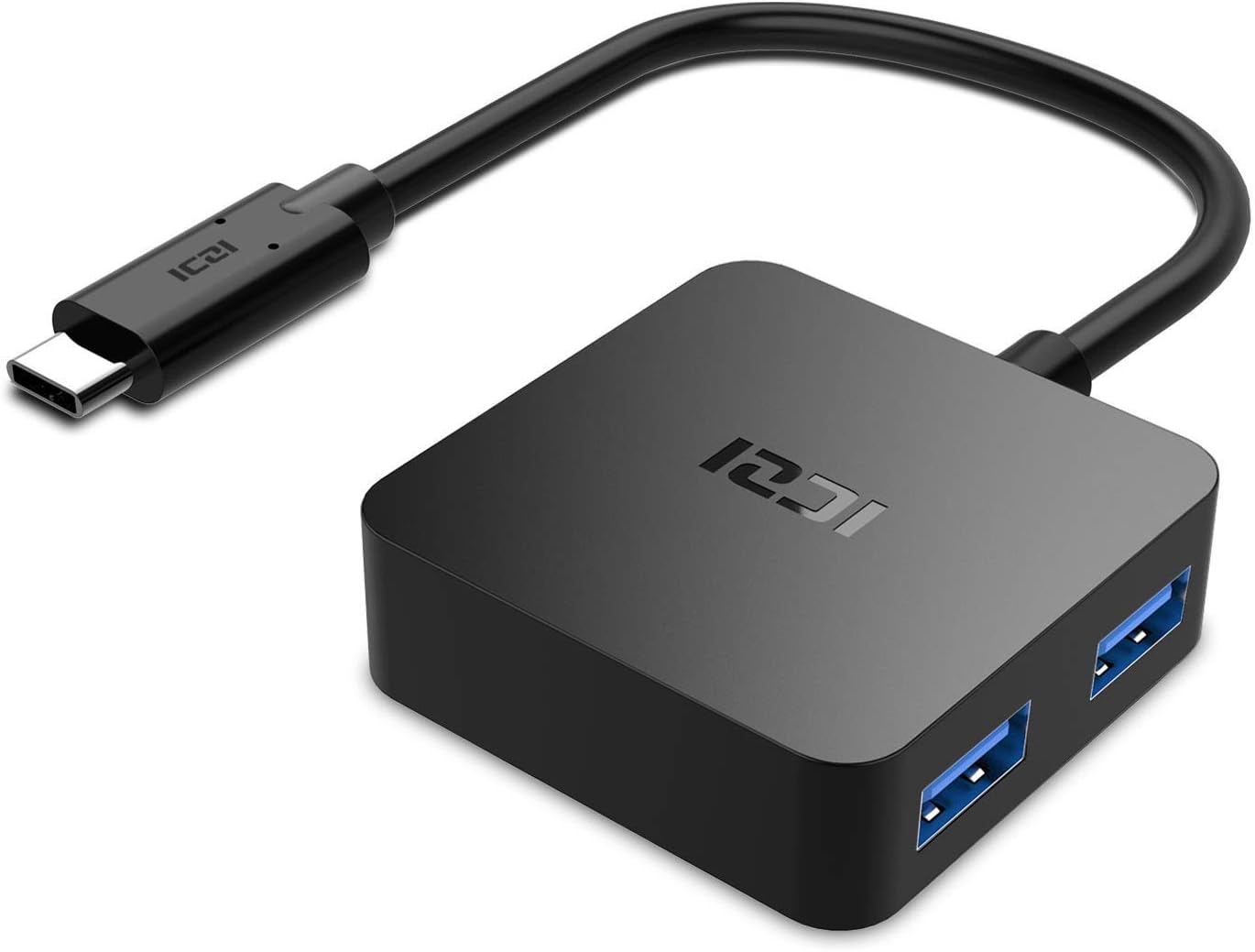
Bypass the USB-A low power delivery of your motherboard and use a USB-C hub like THIS ONE

This tiny box muxes 4 x USB3.0 signals into a USB-C signal which in the case of this z370 motherboard leads to collision free communication and also pushes usb-C higher power to all 4 usb-A ports.
The result is tracking and audio with no glitch.

Mansplaining (maybe): Each sensor eats up 76 MB/s and in USB 2.0 mode 16 MB/s, goggle audio probably eats up 48 kHz@16bits X 2 = much less than 1 MB/s total with 2 sensors: <160 180="" 3="" and="" mb="" p="" s="" sensors="" with="">Why does this collide on the z370 internal USB controller but not via a usb-C hub? My guess is power supply of the hub via usb-c increased power delivery makes the end point's electronic more stable so the signal timing is more stable, less for the z370 controller to correct, no loss tracking.
It might be why a powered USB-A will also provide stable tracking. In other word it's not the bandwidth as much as enough power to the sensors.

Tuesday, September 24, 2019

TurboTax - expensive bugs and manipulative tactics.

PROS:

  • phone support


CONS:

  • makes mistakes parsing past returns
  • makes mistakes losing NOL carryforwards
  • bad GUI on the app and near unusable on the web app
  • deceitful. For example there are unnecessary animations to create the illusion of intense processing when parsing takes 1s at the most, checking against IRS rules no more than 10ms

CONCLUSION: I am surprised Intuit didn't land itself a class action lawsuit for making mistakes in tax filing. Their lobbying efforts sure pay off.

iFlight XL8 and DJI FPV

PROS:

  • Very strong
  • X configuration
  • Can fit the DJI FPV air unit when mounted above the Matek F405-CTR
  • Perfect size for long range (8" props are expensive, I use 7" props instead)
CONCLUSION: A great frame for HD long range, smooth flight when combined with the iFlight ION 2506-1250

Thursday, September 19, 2019

Linksys WRT1200ac - Zero Problem

PROS:

  • works flawlessly!
  • file sharing from USB drive works (Uninstall>Turn Windows feature on or off>SMB 1.0)
  • 4 gigabit links
CONS:
  • SMBv1 for file sharing
  • slow for 2019, still pushes 60 MB/s in file transfer over the air
Conclusion: If you don't need 200 MB/s over the air, buy this because, unlike newer models, it works without a glitch.

TP-LINK ARCHER AX6000 - Fast But Faulty And Unhealthy

PROS:

  • blazing fast
  • good tech support
CONS:
  • 5GHz AC drops frequently and doesn't reconnect until reboot
  • head buzzing when wifi is on (we keep it off at night because of that)
CONCLUSION: don't buy

Saturday, June 1, 2019

K210 Maix Bit - neural network in the palm of your hand

What's that?
The K210 was released last year by crypto-mining chip maker Canaan and sipeed build devboards and a python layer that work very well. The dev boards are cheap and well made, including screen and cheap ov2640 camera, it's plug and play, almost.

PROS:
  1. small
  2. power efficient
  3. crazy good value for the price
  4. fast enough to do mobilenet v1 at 28 fps
  5. very decent documentation and API especially for a 6 month old hardware
  6. very responsive dev team that'll help you
  7. NN in keras means easy to design your neural net and train it
  8. two builds of the python firmware include openMV! 
  9. include a neural net accelerator, hardware FFT and can handle a 7 microphone array for sound location!
CONS:
  1. linux heavy so you'll have to setup a lot of things right, the easy way:  https://github.com/laurentopia/Learning-AI
  2. toolchain somewhat convoluted, requires a lot of setup also but once it's working it's a few clicks to convert from .h5 to k210 native format
  3. toolchain a bit green so you may run into problems but there are people to help on the telegram channel
If you've never done anything neural net related, get it, it's really good.
If you're seasoned, get it, it's fun and fast.